Larger Than the Story

Trauma lives in more places than most people realize. If you're carrying more than you can explain — in your body, your reactions, your patterns — there's a way through, and you're in the right place.

Online trauma counselling across BC — EMDR and somatic therapy with Todd Blattner, MA, CCC.

You're functioning. Maybe even doing it well — keeping up with the demands, staying busy, holding it together. But there's a part of you that feels like it's frozen somewhere back there, behind the performance. Like you're watching yourself go through the motions and wondering when the real you is going to show up — or fearing that it might.

Or maybe it doesn't look like that for you. Maybe it looks like anger that arrives faster than you can explain. A drink that became two that became a habit you don't fully understand. A body that carries more tension than it should. Or more weight. Anxiety that won't stop. A sadness that has no clear address.

None of these are character flaws. They aren't weakness. They're what survival looks like from the inside.

What Is Happening

The body remembers

Trauma isn't only the terrible things. It's also everything your nervous system once experienced as too much — and couldn't fully process at the time. Part of what couldn't be held got stored away. The rest of you kept going, kept managing, kept functioning. But that stored part doesn't stay quiet. It comes forward in the moments you least expect — in the reaction that's too big, in the numbness you can't explain, in the distance you feel from your own life.

You are carrying some of what came before you, from generations past. You are also carrying what has happened to you. And without knowing it, you are likely passing some of it forward — to your children, to those around you. But you can be the one where it stops.
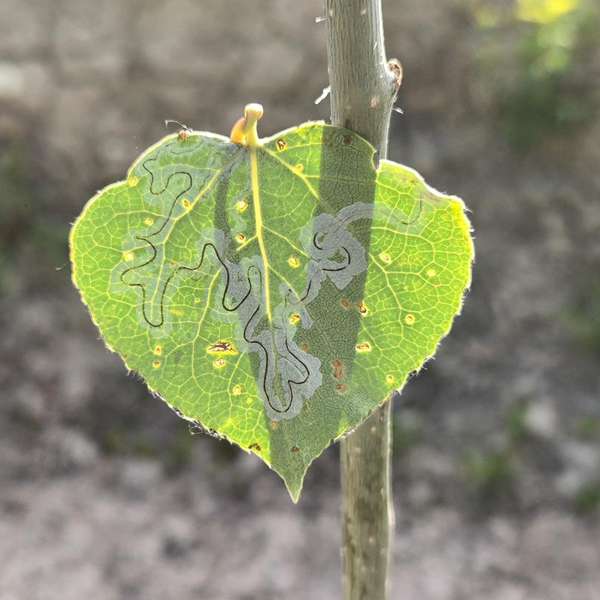
Leaf-miner trails — damage written beneath the surface

Leaf-miner trails — damage written beneath the surface.
If you are here, this is what is calling you.

It's not duty that's calling. And it's not about fixing everyone — though what heals in you ripples outward. Something in you already knows there's more available than this — more ease, more presence, more of yourself. Part of you already knows the way home.

"You are larger than the story fear has been telling you."

The work is simply allowing the body to remember what it always knew: that safety is possible. That trust is real.

This is a road I have walked — one I'm still walking. This is how I can help.

If something here has touched a thread in you, there's a next step when you're ready — whatever size feels right.

There's no wrong door. I'll be here when you are ready.

This work is different from talk therapy. I work with the whole person — body, mind, emotion, and spirit — because healing doesn't happen in isolation from how you're living.

01 / First Session

Mostly about getting to know each other. What's brought you here. What you're carrying. What you're hoping might be different. We'll move at whatever pace feels right. You'll likely leave with a simple practice to take with you.

02 / Second Session

Usually starts with a short settling practice — something to help you arrive. Then we catch up: what's shifted, what's come up, what's sitting differently. Often emotions surface in this. When they do, we start learning to notice them in the body — where they live, what they feel like as sensation. This is the beginning of learning to retrain the nervous system.

03 / Subsequent Sessions

The safety and presence you're building isn't just preparation — it's the mechanism of healing. From that ground, we can begin to lightly touch what's more difficult, moving toward it and back again, only as far as feels tolerable. Trauma doesn't have to be relived or spoken aloud. It just needs to be met — gently, with the body present, and with a way home. The pace is always yours.

As that sense of safety deepens, we can begin to gently touch into more difficult memories and experiences. There are a variety of tools we might use for this:

How I Work

The tools we might use

IBP draws on Rogerian, Gestalt, Jungian, and somatic traditions to work with the whole person — tracking sensation, breath, posture, and emotion together, in the context of the therapeutic relationship itself. Rather than a collection of separate techniques, IBP is an orientation: the coherent frame underneath how I work. I am certified in IBP.
All emotional responses originate below the level of conscious awareness — and all of them register somewhere in the body as sensation. Learning to sense and follow emotion as it lives in the body builds a connection between the thinking mind and the reacting one. Bringing compassionate, curious attention to those sensations is a gentle and often surprisingly powerful way to heal old wounds and to work with strong emotions as they arise.
CBT works from a simple idea: thoughts, feelings, and behaviours feed each other, so shifting one shifts the others. After trauma, this often shows up as fixed beliefs — about safety, blame, or self-worth — that formed in the moment but never got updated. Working together, we identify these automatic thoughts, test how accurate they still are, and practice new ways of responding. CBT is a foundation stone in my training, and a steady, practical companion to the deeper somatic and relational work.
EMDR (Eye Movement Desensitization and Reprocessing) is an evidence-based trauma therapy that uses bilateral stimulation — eye movements, taps, or tones — to activate the brain's natural healing system. The emotional intensity of a memory decreases, and more present-day perspectives begin to emerge. Clients don't need to retell the trauma in detail; EMDR offers a structured, tolerable path toward reduced distress and long-term integration. I am certified in EMDR.
IFS views the mind as a system of inner parts, each carrying its own emotions, beliefs, and intentions: protective parts, wounded parts, reactive parts. Rather than trying to eliminate them, IFS helps you build a relationship with them from a grounded, centred place — what IFS calls the Self. Through gentle dialogue and guided awareness, protective parts can soften, burdened parts can release old pain, and the whole inner system becomes more integrated. I work from an IFS-informed perspective.
Flash is a gentle approach that allows the emotional charge of a difficult memory to soften while your attention stays on something neutral or pleasant. Through a "positive engaging focus" and brief sets of eye blinks or taps, Flash activates the brain's natural processing system without revisiting the event. This makes it particularly useful for memories that feel too charged to approach directly, and as a complement to broader trauma work including EMDR. I am certified in Flash Therapy.
TRE activates a gentle, involuntary trembling response in the muscles — the same release animals use instinctively after threat or exertion. In humans, this natural process often gets suppressed. Guided through a simple sequence of exercises, the body begins to shake and release on its own. Over time this reduces chronic tension, calms the nervous system, and allows the body to return to a more regulated baseline. I am certified in TRE.
These are the practical, everyday tools: breathing techniques, orienting exercises, body-based anchors that interrupt the loop of anxiety, rumination, or dissociation. They're often what you take home from a session — small practices that help regulate the nervous system between appointments and, over time, build a more embodied way of moving through the world.
These practices train the mind to notice thoughts, sensations, and emotions as they arise, without immediately reacting or being swept away. In a therapeutic context, mindfulness isn't about emptying the mind or achieving calm — it's about developing a slightly wider perspective on your own inner experience. That space between stimulus and response is where change becomes possible. I have practiced meditation and mindfulness for over 30 years and draw on that experience directly in this work.
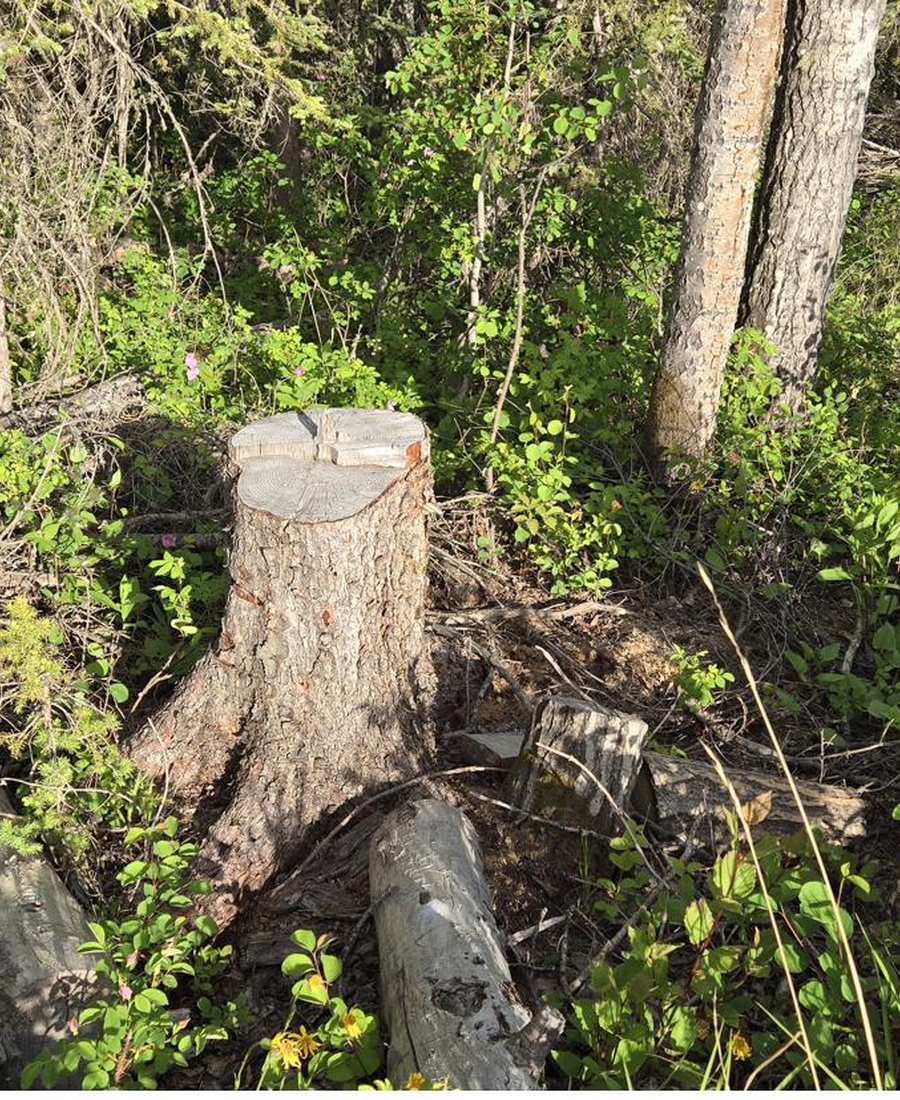
Weathered stump with returning growth
A Free Guide

Healing Trauma lays out four simple steps for understanding trauma, plus two short practices to help your nervous system learn to feel safe again.

Download Healing Trauma
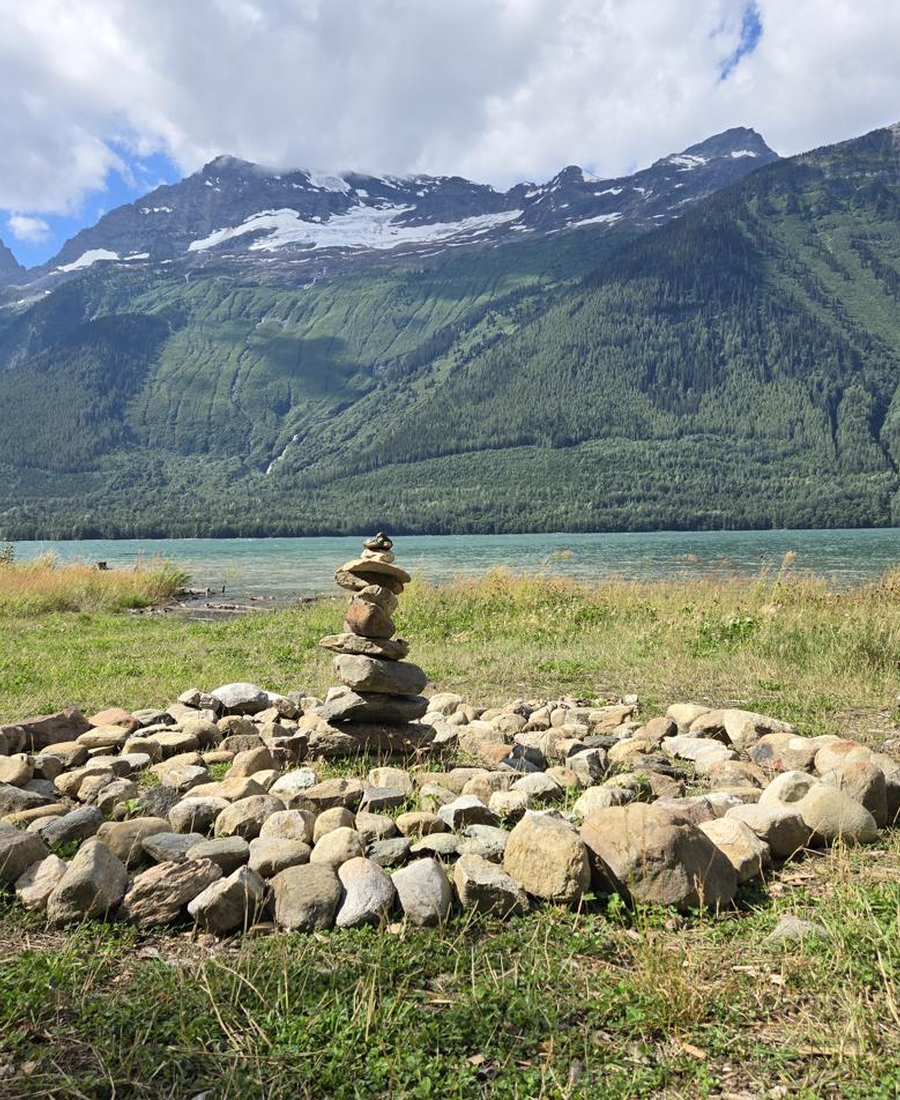
Stone cairn beside a glacial lake

There's a next step, whenever you're ready.

There's no wrong door. I'll be here when you are ready.

Get in touch
An open door ← Back to Work With Me