Relationships and Couples

Online couples and relationship counselling across BC — assessment, skill-building and practice to break old patterns, rebuild trust and reconnect, with Todd Blattner, MA, CCC.

Relationships: The Dance Between Two

Two tall grass stems leaning toward each other above autumn shrubs and a calm blue lake

Relationship and couples work is about building the trust, communication, and understanding that let a relationship deepen over time. It’s also about rediscovering the connection that drew you together in the first place, and learning to move through differences with more ease.

The Relationship Game

Relationships don’t always feel like a game. They can be a war, a garden, a cold distance, or a passionate love. But there are common patterns, and it helps to see how our choices lead us into them.

The relationship game maps out some of these common paths that a relationship can follow.

We can learn to play the relationship game better, and this has long term benefits for ourselves, our children, and the people around us. This is the value of relationship counselling.

Play the Relationship Game

How to play

You are the narrator. You choose what happens to the couple. You can play to see what different choices lead to, or to find situations that feel like your own relationship. The possibilities found in this game do not represent all possible relationships. They are common patterns among infinite variations.

This game shows common patterns, not a diagnosis of any relationship. If you are ever afraid of your partner, or of being hurt, support is available.

The stages of the game

These are the stages represented in the game. They illustrate common patterns, but do not represent all relationships.

Searching and Romantic Love (Stages 1 and 2)

Most relationships begin by merging. Two people feel drawn together, and the differences between them are easy to overlook. Sometimes the attraction is felt more by one person than the other, and the relationship ends before it begins.

Power Struggle, One Submits, and the Abandonment/Inundation dance (Stage 3)

Sooner or later the differences show up, and the couple has a choice. They can part, or move into one of three common patterns: a struggle between two people who are about equally matched, a pattern in which one person is in charge and the other becomes smaller, or a chase, in which one person pursues and the other withdraws.

Differentiation (Stage 4)

Each pattern can hold for a long time. A relationship moves on when at least one person begins to grow: learning new skills, building their capacities, and becoming more whole in themselves. Each person begins to say, “I can be me, and you can be different.”

Equality (Stage 5)

From there, couples may keep growing together, or settle. Settling can be comfortable, and it can also harden or go flat. Stress, an affair, or a loss can pull a couple back toward their old pattern, though they do not lose everything they have gained.

Skilled Polarity, and Expansion and Deepening (Stages 6 and 7)

With skill, differences can become a source of energy and play instead of a threat. Each person holds their own ground and the relationship as well. It is open-ended, and it keeps growing.


Who needs relationship therapy?

You don’t need to be in crisis. Like a pebble in a shoe, small things get bigger. If you answer yes to any of these, consider - how long has it been going on? Is this what you want for the long term? If not, then counselling can help.

Two leaves side by side, each holding a drop of water
How we talk
How we feel together
Where we stand
One more question

These boxes are for your information only. Nothing you tick is saved or sent anywhere. If you would like a copy of your list, you can download it below.

If you feel afraid of your partner, a conversation on your own first is the better place to start. The section below has questions that relate to more serious issues. If you answer yes to any of them, help is recommended. If you need help now, here are some numbers you can use.

When something more serious is going on

Sometimes what is happening in a relationship goes beyond difficulty or conflict. Abuse can happen in any relationship, and to anyone. It is not always physical, and it can be hard to see from the inside. You can read these questions quietly and notice your own answers. There is nothing to tick, and nothing is saved. Tap or click anywhere in this box to close it.

  • Does your partner belittle you, humiliate you, or call you names?
  • Does your partner control the money, or make you account for everything you spend?
  • Does your partner limit who you see, where you go, or what you do, or make it hard for you to have a life of your own?
  • Does your partner check your phone, your messages, or where you are?
  • Has your partner pushed, hit, or otherwise physically hurt you, or threatened to hurt you, your children, your pets, or themselves?
  • Does your partner pressure or force you into sex?
  • Are you afraid of your partner, or of how they will react?

If you answered yes to any of these questions, couples counselling is not the right place to start. You deserve your own support. Please reach out for a one-on-one conversation, or contact one of these services.

If you recognize some of this in your own behaviour and want to change it, that takes courage. A one-on-one conversation is the right place to start, and you are welcome to get in touch.

The safest way to call, or email, is from a device your partner cannot access, such as a friend’s phone or a work phone. If you get in touch with me, please tell me the safest way to reply to you.

What does therapy look like?

How we meet

We meet online via videoconference. This can be done on a phone, tablet or computer.

It is important to meet on different devices and from different rooms so each person has their own space. The rooms should be separated enough so that the voices don’t carry between them.

If that is hard to arrange, tell me and we will work out something that does.

Before we begin

I’ll send some homework first to help you prepare and get the most out of the sessions.

The first session (90 minutes): ground rules and safety

We begin with ground rules and safety, including some initial teaching about boundaries and my role in helping each of you maintain them.

Then I will hear from each of you how you see the problem. We won’t generally go deeply into the problems in this session, though they can be named. It is also a chance to get to know each other and to find the common ground that exists.

Sessions two and three: one for each of you

Sessions two and three will be individual sessions, one with each of you. These sessions are to talk about the specific problems and issues and what is going on for you.

These are not individual therapy. They help me understand each of you, and they feed back into the work we do together.

I don’t keep secrets that affect the relationship, and I’ll help you bring anything important forward in your own words. Safety is the exception, and your safety comes first. We’ll go over how this works, in writing, before your individual sessions begin.

Session four (90 minutes): feedback and direction

The first three sessions let me assess where you are and see the patterns between you. In the fourth session I will share what I have seen of your strengths and of the patterns, and we will agree together on where to focus. Your goals can keep developing as we go.

Session five and onward (50 minutes, unless you request more or it is needed)

From here we build skills and use specific interventions. There will be homework or practice between each session. This helps you get the most for your investment in therapy time.

Doing the work

To get the benefit, you have to do the work.

Prepare to be challenged at times. You are investing in therapy because you want some things to change. Sometimes this means confronting things that are uncomfortable. Each of you will be asked to look at your own part. My job is to help you with this.

Therapy is a bit like hiking in the mountains. It isn’t always pleasant, and parts of it are hard. However, there are beautiful views along the way, it is good for the mind, body and spirit, and it feels good to know you’ve done it. Relationship therapy has the additional advantage that it will benefit you, and your family, for years to come.

The sun and its reflection on a lake, seen through autumn shrubs and a tall spruce
A pale heart-shaped patch of lichen on a grey rock

Why invest in relationship therapy now?

Patterns set in over time. The earlier you look at them, the more room there is to change them.

Small skills add up. A little practice each week changes how you talk, listen and repair after a hard moment.

Resentment is much easier to work with before it hardens.

Growth by one person changes the whole dance. You do not both have to start at the same moment.

This is also an investment in your children. They learn how relationships work by watching yours, so the skills you learn and show now will shape their relationships later as well.

Whatever happens to the relationship, what you learn here goes with you. It is an investment in the rest of your life, not only in this relationship.

Get in touch

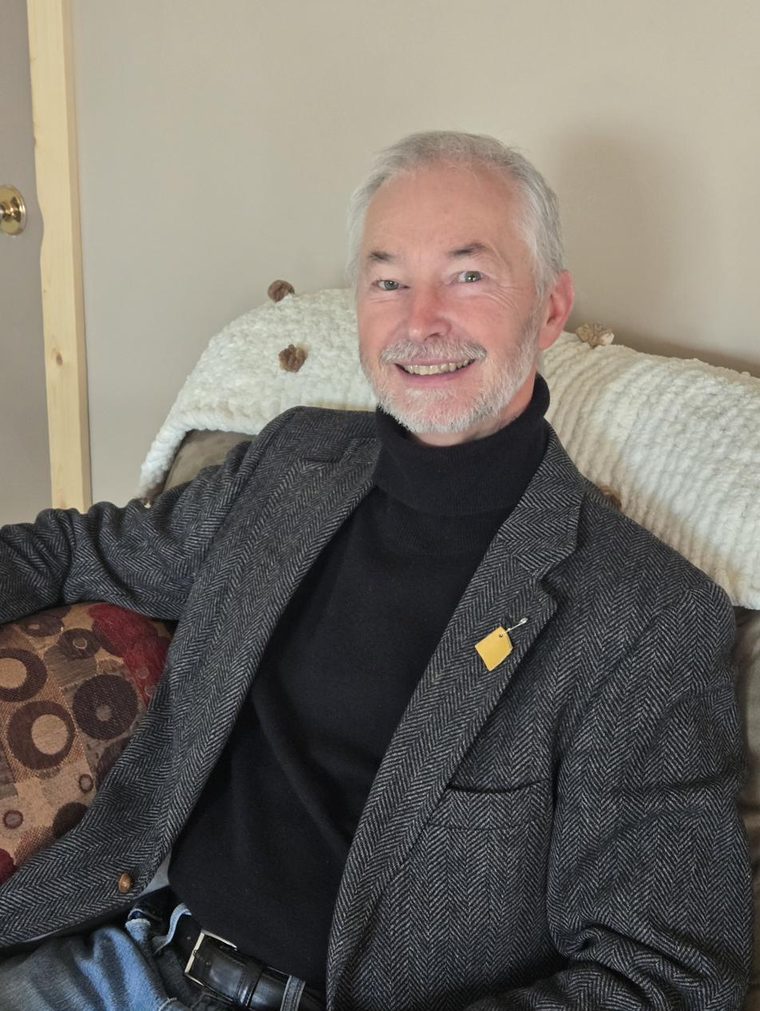
Todd Blattner, smiling, seated in a grey tweed jacket and black turtleneck

If something here has touched a thread in you, or in the two of you, there’s a next step when you’re ready, whatever size feels right.

Send me a message if you have a question, would like a free 20-minute consultation (together, or one at a time), or are ready to begin. We’ll find times that work for both of you.

There’s no wrong door. One step at a time will take you to where you want to go.

Get In Touch
Share this page
Link copied
A Free Activity

Know Your Circle is a short drawing activity for seeing what belongs to you in a relationship, what belongs to the other person, and what you choose to let in or leave outside.

Download the Activity
An open door ← Back to Work With Me